
2026.11.11
Sourcing Cypress Sawdust and Rice Bran Outside Japan
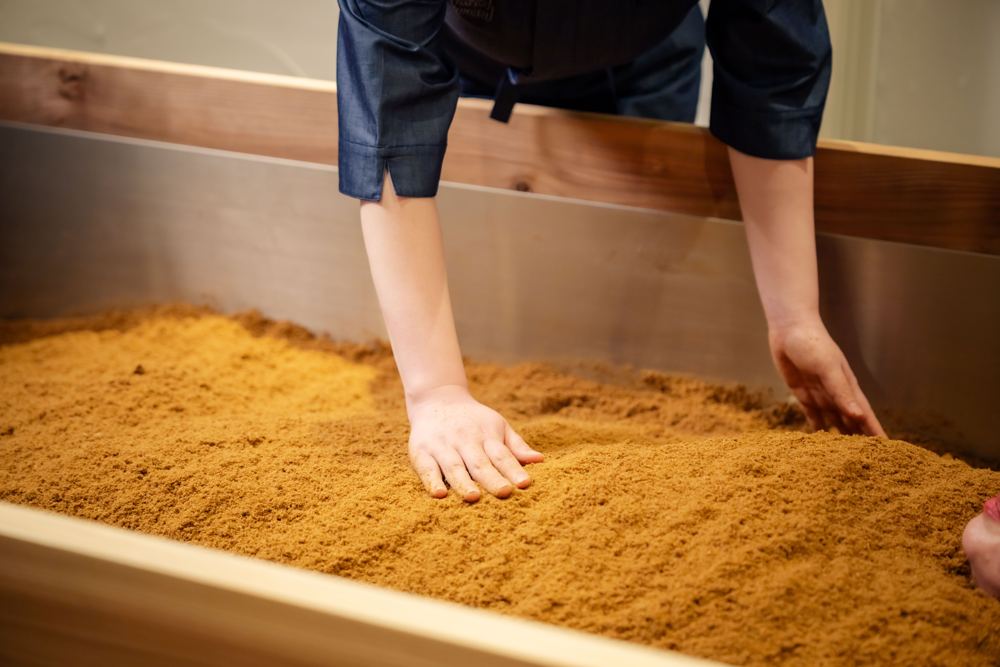
If you are planning an enzyme bath outside Japan, one of the first practical questions is where the materials will come from. A Japanese enzyme bath is a bed of cypress sawdust and rice bran, warmed by fermentation rather than by a boiler or heater. Everything a guest feels — the warmth, the scent of wood, the soft texture around the body — starts with those materials. In this article, we look at how to think about sourcing cypress sawdust and rice bran abroad: bringing materials from Japan, using materials from your own country, and the questions worth asking before you decide.
Why the materials matter so much
In most bathing businesses, the water or the stones are fairly simple inputs. In an enzyme bath, the material is the bath. The heat comes from living microbes working in the bed of sawdust and rice bran, so the type of wood, the condition of the bran and how consistent they are from one delivery to the next all affect how fermentation behaves.
The materials also shape the guest experience. The scent of wood and rice bran is one of the first things guests notice, and the texture of the bed is what makes the deep, enveloping warmth feel so different from a sauna. At our own shops in Japan, around 90% of guests return, and much of what they come back for begins with the quality of the bed they lie in.
That is why sourcing is not a detail to settle at the last minute. It is worth thinking about early, alongside your location and your opening schedule.

Option 1: Using materials from Japan
Some owners want to use the same kind of materials that are used in Japan. That is understandable — it is a way to start from something familiar and proven. We can support the arrangements for shipping materials from Japan.
There is one important point to understand from the start: whether these materials can be shipped depends on the plant quarantine and import rules of your country. Wood products and plant-based materials are often checked carefully at the border, and the rules differ from country to country. In some places, shipping is possible with the right paperwork; in others, it may be restricted.
Shipping also takes time and adds cost and effort, especially for a material that is used in volume and replaced from time to time. So even when shipping from Japan is possible, it helps to think about it as part of a long-term plan, not only for your opening day.
Option 2: Using materials from your own country
Other owners prefer to use materials sourced locally. This can make daily operation simpler: shorter supply lines, easier restocking and less dependence on international shipping. It can also be a good fit for a business that values local and sustainable sourcing.
We can work with locally sourced materials too. However, not every sawdust or every rice bran is suitable. There are conditions for the materials that can be used, and we explain them individually, based on what is available where you are. A material that looks similar on paper may behave very differently once it starts to ferment.
If you are considering local materials, it helps to start conversations with possible suppliers early, and to look for partners who can deliver a steady quality over time — not just a single good batch.
Questions to ask before you decide
Whichever direction you lean toward, these questions are a useful starting point:
- What do your country’s rules say? Check plant quarantine and import requirements for wood and plant-based materials before you plan around shipping from Japan.
- Is the supply steady? An enzyme bath runs every day. Ask whether a supplier can provide a consistent material over months and years, not only once.
- How will materials be stored? You will need a clean, practical place to keep material before it goes into the tubs.
- How will materials come in and go out? Setting up the tubs and replacing the material are tasks we recommend doing in pairs, and the building needs a practical route for bags of material.
- Where will used material go? Used material can be reused as compost rather than thrown away. It is worth thinking about how that will work in your area.
Materials, climate and fermentation work together
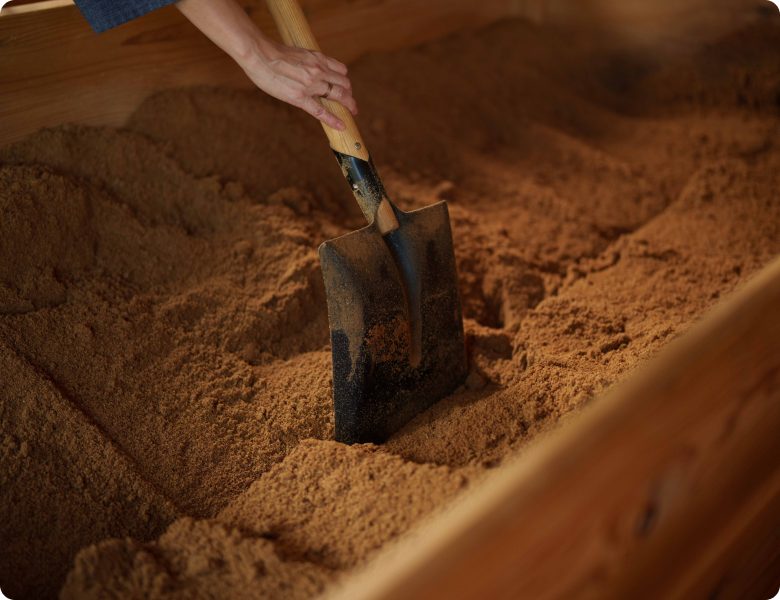
Choosing a material is only part of the picture. Fermentation also shifts with the temperature and humidity of the room, the season and the number of guests. The same material can behave differently in a dry winter, a humid summer or a newly built space.
We have supported more than 80 enzyme bath openings across Japan, from snowy Hokkaido to subtropical Okinawa. Even within one country, materials and climates vary, and each shop needs a slightly different approach. That experience is what allows us to think with owners about materials and conditions in other parts of the world.
Materials are also closely linked to odor. In Japan, the number of enzyme bath shops is growing, but it is not unusual for shops to run into trouble with neighbors over odor, and some have even had to close because of it. Our enzyme baths are known for their low odor. They are not completely without scent — no fermentation is — but we have installed them in hotels, salons and even apartment rooms, and none of the shops we have supported has had to close because of odor. That comes from keeping fermentation in good condition, from our original fermentation liquid, and from how the space and the flow of air are planned.
Why sourcing is worth getting right with support
An enzyme bath cannot be started just by buying tubs and filling them with sawdust and bran. If the materials or the conditions are not right, the bath may not warm up properly, odor can appear and quality can become uneven — and guests notice quickly. Not every shop gets this right, even in Japan. That is why it is worth learning from a team that runs enzyme baths every day.
In our overseas program, you train hands-on for 7 days in a working shop in Miyama, Kyoto, and receive a certificate on completion. As an option, our opening support can help you choose materials locally, arrange shipping of materials, and set up fermentation in your own space, and our annual fermentation care can stay with you through the seasons. It is not a franchise: you open under your own name.
Experience our enzyme baths in Japan
The best way to understand an enzyme bath is to lie in one. Hakkou Ningen runs two enzyme baths of our own in Japan:
- Osaka — Kanzakigawa shop: three stops from Osaka-Umeda on the Hankyu Kobe Line, then a 7-minute walk from Kanzakigawa Station. A fully private room for one or two guests, by reservation only, with an English-language guide available. Book online.
- Kyoto — Miyama main shop: our home in the countryside of Miyama, Kyoto, and the working shop where owners train hands-on for 7 days. The Miyama shop is closed to bath guests for the winter and reopens in April 2027.
If you are thinking about opening an enzyme bath, a session at one of our shops will show you exactly what you would be offering your own guests.
Get the free program guide
Thinking about offering an enzyme bath in your country? Our free program guide includes pricing for each plan, a cost breakdown, a business simulation and the full training curriculum.
Message us on WhatsApp to get the guide — we will reply within three days. You can also learn more on our opening program page.
In your country too, experience
Japan’s enzyme bath.
Get the free program guide: pricing for each plan, a cost breakdown, a business simulation and the full training curriculum. Sent to you on WhatsApp within three days.


program guide


