
2026.11.12
Why Fermentation Changes with the Seasons
Why does an enzyme bath feel a little different in January than it does in July? Because fermentation changes with the seasons. A Japanese enzyme bath is a bed of cypress sawdust and rice bran, warmed not by a boiler or heater but by the activity of living microbes. Like any living thing, those microbes respond to the world around them — the temperature of the air, the humidity, the materials and the rhythm of the shop. In this article, we look at why fermentation shifts through the year, what that means for the people who run an enzyme bath, and why it matters so much if you are planning to open one in a new climate.
A bath that is alive
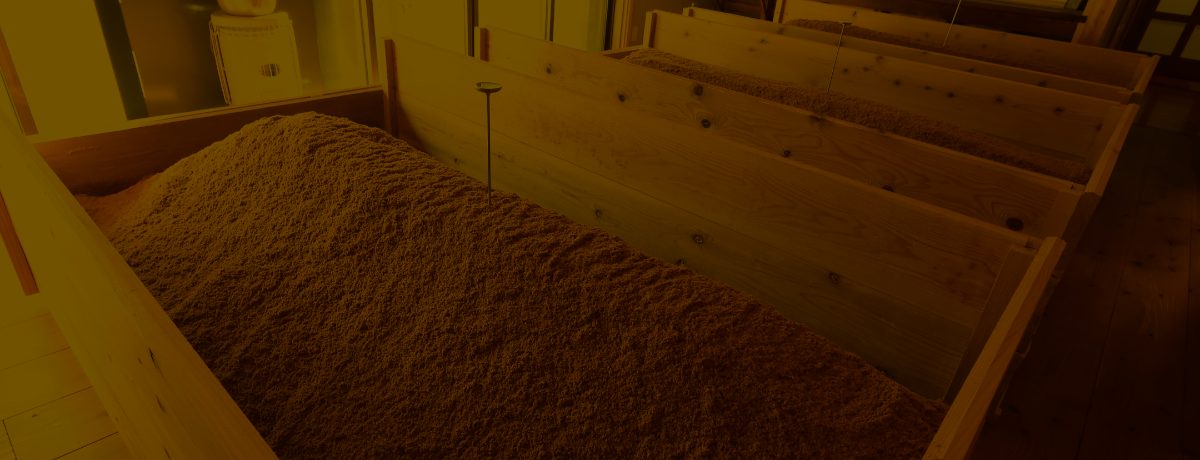
Most bathing experiences are built on something you can switch on and off: a heater, a boiler, a set of hot stones. An enzyme bath works differently. The warmth that surrounds a guest comes from fermentation happening inside the bed itself. Nothing is plugged in to make it hot.
That is what makes the experience so unusual. Guests lie down in soft, fragrant material that holds warmth all around the body, with the scent of wood and rice bran in the air. Many people find the warmth feels deeper and gentler than the dry heat of a sauna. But it also means the bath is never exactly the same from one day to the next. At our shops, we describe the morning check as “checking the health of a living thing” — and that phrase becomes especially true as the seasons turn.
What changes from season to season
Several things around the bath shift through the year, and each of them can affect fermentation:
- Air temperature. When the room is cold, the bed loses warmth to its surroundings more easily. When the room is warm, fermentation can become more active than expected.
- Humidity. Moisture in the air affects the moisture in the bed. A dry winter and a humid summer can lead the same bed in different directions.
- The materials. Sawdust and rice bran are natural products. Their condition can vary with the time of year and with how they have been stored.
- The number of guests. Busy and quiet periods change how the bed is used, and that also shapes how fermentation behaves.
None of these factors works alone. A cold, dry week with many guests is a different situation from a mild, humid week with fewer. Running an enzyme bath well means reading all of them together, rather than following a single fixed rule.
Winter, summer and the seasons in between
In the colder months, the challenge is usually keeping the bed comfortably warm and steady. Winter is also a season when a deep, enveloping warmth can feel especially welcome.
In the warmer and more humid months, the challenge can turn the other way. Fermentation may become lively, and the bath needs attention so that it stays pleasant rather than too intense. Humidity also makes the care of the space itself — air, ventilation and how the room feels — more important.
Spring and autumn bring their own kind of difficulty: change. Temperatures can swing between morning and afternoon, and from one week to the next. These transition periods are when an experienced eye is most useful, because the bed is responding to conditions that are still moving.
For guests, the goal through all of this is simple: a bath that feels comfortable, consistent and welcoming every time they visit. At our own shops in Japan, around 90% of guests return, and that kind of loyalty depends on quality that stays steady through every season — not just on good days.
Daily care: listening to the bath
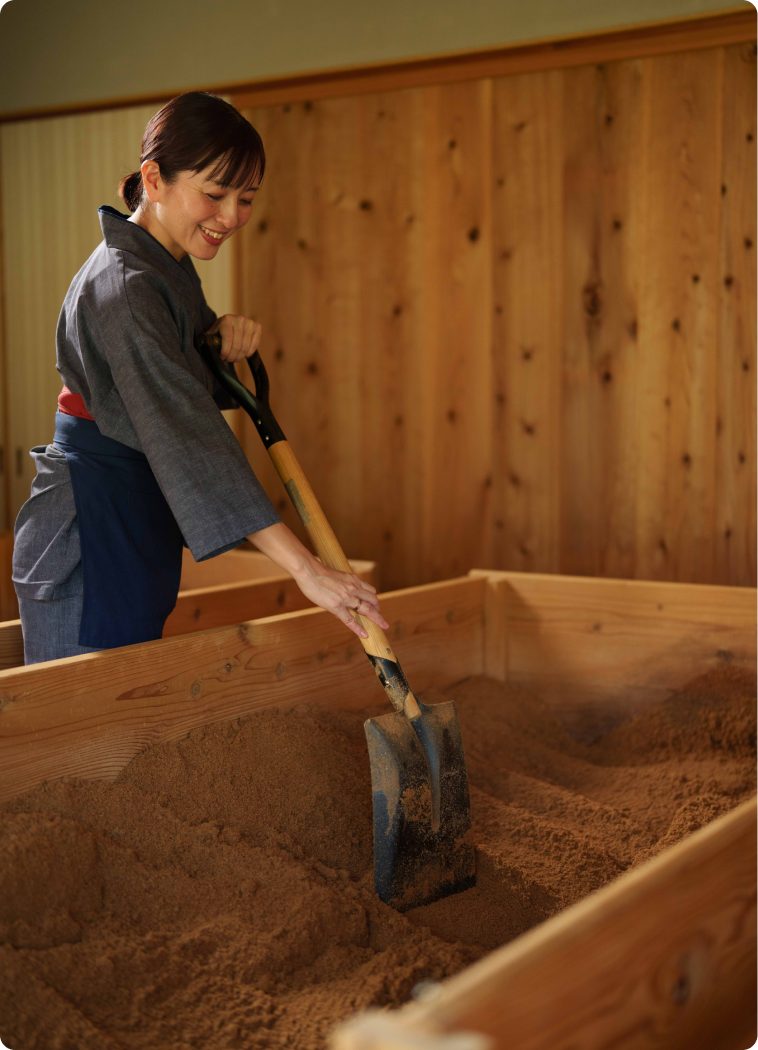
Because fermentation keeps moving, an enzyme bath needs care every day. At our shops, the fermentation bed is not stirred between guests. Instead, maintenance is done after closing each day — for one person looking after two tubs, it takes up to about an hour. It is physical work, but among the owners we work with in Japan, there is a woman in her sixties who manages two tubs on her own. Tasks such as setting up the tubs or replacing the material are best done by two people.
What changes with the seasons is not so much the routine as what you notice while doing it. The way the bed feels in the hand, how it smells and how it holds warmth all give clues about how fermentation is doing. Learning to read those clues — and knowing how to respond — is a skill built through experience in a real shop, through real seasons. It is not something a manual or a temperature chart can fully replace.
Seasons, odor and the space around the bath
Seasonal change also affects how the space around the bath feels and smells. Warm, humid weather in particular can make any fermentation odor more noticeable if the bath and the room are not cared for well. In Japan, the number of enzyme bath shops is growing, but it is not unusual for shops to run into trouble with neighbors over odor, and some have even had to close because of it.
Our enzyme baths are known for their low odor. They are not completely without scent — no fermentation is — but we have installed them in hotels, salons and even apartment rooms, and none of the shops we have supported has had to close because of odor. That comes not only from keeping fermentation in good condition all year, but also from our original fermentation liquid and from how the space and the flow of air are planned.

A new country means new seasons
If you are planning an enzyme bath outside Japan, your seasons will be your own. A coastal city, a dry inland region and a tropical climate each bring a different pattern of temperature and humidity. Your building, your heating and cooling, and your materials will be different too.
That is a big part of why an enzyme bath is not a business you can start just by buying tubs and materials. If fermentation is not managed well, the bath may not warm up properly, odors can appear and quality can become uneven — and guests notice quickly. Not every shop gets this right, even in Japan. Meanwhile, a delayed opening means rent and staff costs continue without guests.
We have supported more than 80 enzyme bath openings across Japan, from snowy Hokkaido to subtropical Okinawa. Working through such different climates is what allows us to think with owners about the seasons in other parts of the world. In our overseas program, you train hands-on for 7 days in a working shop in Miyama, Kyoto, and receive a certificate on completion. As options, our opening support can help set up fermentation in your own space, and our annual fermentation care can stay with you through the seasons. We can also support shipping materials from Japan (where your country’s quarantine rules allow) or work with materials from your own country. It is not a franchise: you open under your own name.
Experience our enzyme baths in Japan
The best way to understand an enzyme bath is to lie in one. Hakkou Ningen runs two enzyme baths of our own in Japan:
- Osaka — Kanzakigawa shop: three stops from Osaka-Umeda on the Hankyu Kobe Line, then a 7-minute walk from Kanzakigawa Station. A fully private room for one or two guests, by reservation only, with an English-language guide available. Book online.
- Kyoto — Miyama main shop: our home in the countryside of Miyama, Kyoto, and the working shop where owners train hands-on for 7 days. The Miyama shop is closed to bath guests for the winter and reopens in April 2027.
If you are thinking about opening an enzyme bath, a session at one of our shops will show you exactly what you would be offering your own guests.
Get the free program guide
Thinking about offering an enzyme bath in your country? Our free program guide includes pricing for each plan, a cost breakdown, a business simulation and the full training curriculum.
Message us on WhatsApp to get the guide — we will reply within three days. You can also learn more on our opening program page.
In your country too, experience
Japan’s enzyme bath.
Get the free program guide: pricing for each plan, a cost breakdown, a business simulation and the full training curriculum. Sent to you on WhatsApp within three days.


program guide


