
2026.11.19
From Farmers’ Compost to Wellness: The History of the Enzyme Bath
The history of the enzyme bath is a story about warmth that nobody had to buy. Long before it became a wellness experience in Japanese cities, the idea behind it was simple: when plant material ferments, it grows warm on its own. In this article, we look at where the Japanese enzyme bath is said to have come from, how it grew into the bathing experience people enjoy today, and why its roots still matter for anyone thinking of opening an enzyme bath outside Japan.
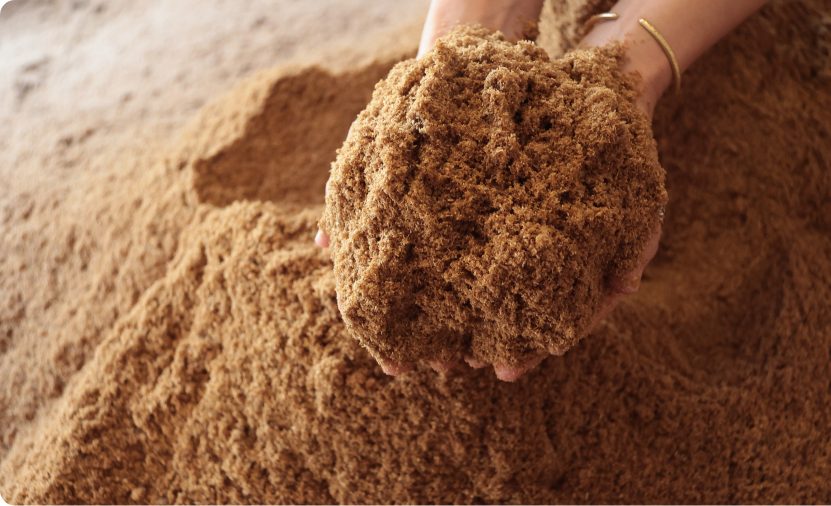
Warmth from the compost heap
Anyone who has kept a garden compost heap knows a small piece of everyday magic. Push your hand into the middle on a cold morning and it is warm — sometimes surprisingly hot. Nobody lit a fire. The heat comes from countless microbes breaking down leaves, straw and other plant material.
There are several theories about how the enzyme bath began, but it is often said to have started with the ingenuity of Japanese farmers. To get through cold winters, they warmed themselves in compost that was naturally generating heat. It was a practical idea, born from daily life on the land rather than from a laboratory or a spa designer’s sketchbook.
We like this story because it captures what the enzyme bath still is today: a bath that borrows its warmth from nature’s own process, using materials that come from fields and forests.
From the farm to a bath
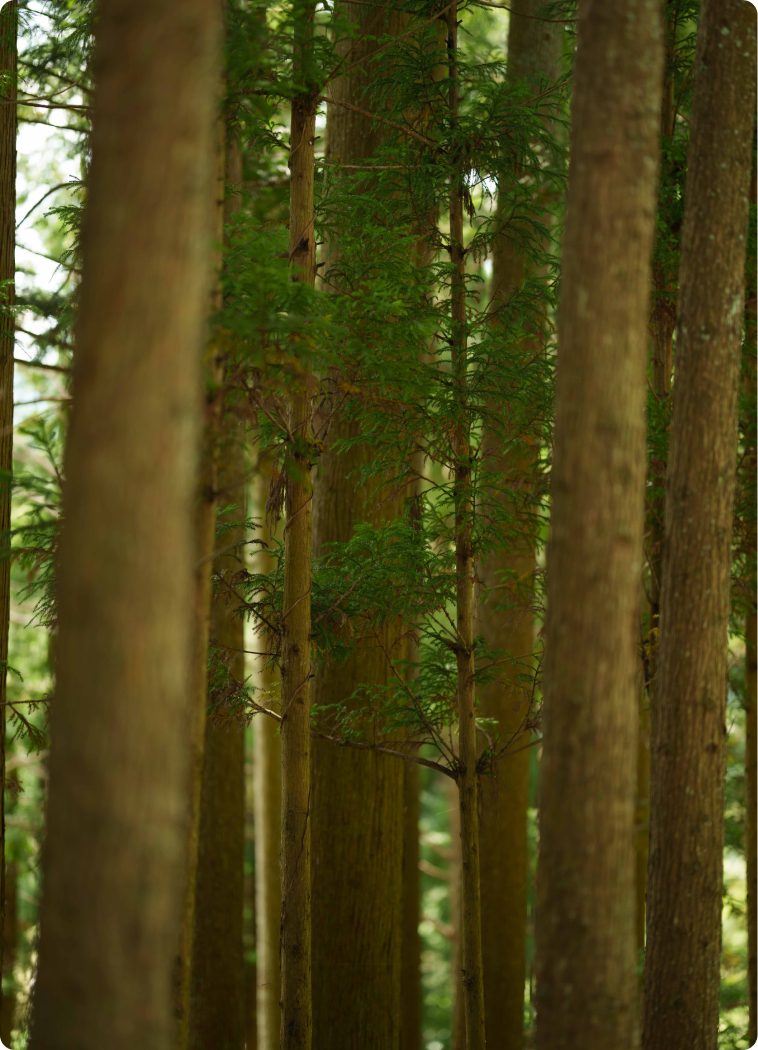
A compost heap and a bath you would welcome a guest into are, of course, very different things. Today’s enzyme baths use clean, carefully chosen materials such as fine cypress sawdust and rice bran, which give a soft texture and the gentle scent of wood and grain.
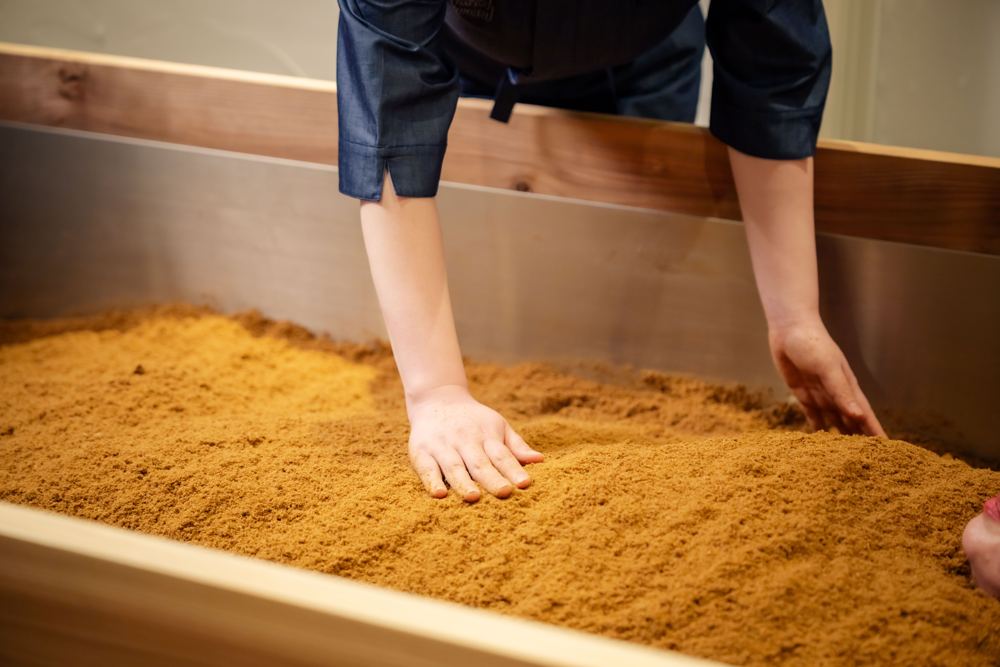
Just as important, a bath needs care that a compost heap does not. A heap left alone warms up and cools down on its own schedule. A bath that welcomes guests every day needs warmth that is steady and comfortable, a pleasant scent, and material that feels clean and soft. That takes daily attention to the fermentation bed: maintaining it after closing, watching it and responding to the way it changes. At our own shops, we describe the morning check as “checking on the health of a living thing.”
Becoming a wellness experience
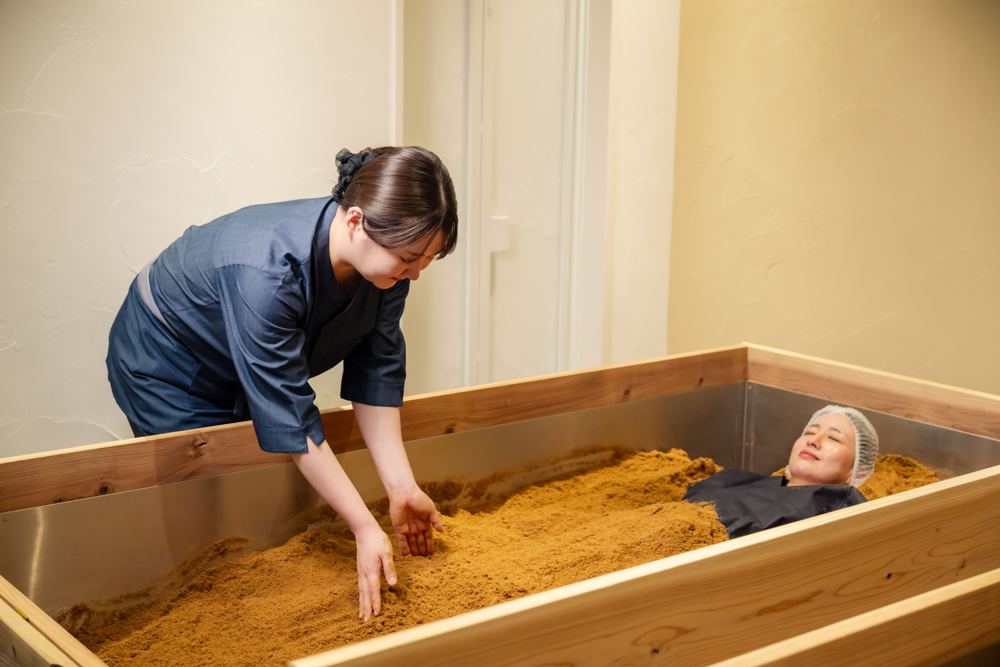
Today, enzyme baths can be found across Japan, in city shops, small salons and quiet countryside spaces. The basic experience has stayed close to its roots. A guest lies in a bed of cypress sawdust and rice bran that is warm from fermentation alone — no heater and no hot water. Staff gently cover the guest up to the shoulders, and the guest rests in the warmth for about 15 to 20 minutes. A whole visit, including changing, showering and relaxing afterward with a cup of tea, takes about 60 to 90 minutes.
What changed is everything around the bath. Modern shops think carefully about hygiene, comfortable changing rooms, calm lighting and, above all, hospitality. The enzyme bath is usually a one-to-one experience: a staff member guides each guest, covers them with the warm material and checks on them while they rest. That personal welcome has become as much a part of the tradition as the fermentation itself.
It is an experience people tend to come back to. At our own shops in Japan, around 90% of guests return, and our shop in Kyoto is often booked up to three months ahead.
An old idea that fits modern values
Part of the enzyme bath’s appeal today is that its history lines up so naturally with what many people care about now:
- No fuel for heating. The warmth comes from fermentation, not from gas, a boiler or an electric heater.
- No tub of hot water. There is no water to heat, fill and drain for each bath.
- Materials that return to the soil. When the material is eventually replaced, it can be reused as compost — the same place the story began.
- Slow, simple self-care. Twenty quiet minutes wrapped in natural warmth, with the scent of wood and rice bran, is a welcome pause in a busy life.
Outside Japan, an authentic enzyme bath is still rare. For guests, that makes it a discovery. For owners, it is a chance to offer something with a real story behind it — not a trend invented for marketing, but an idea that grew out of farm life.
What history teaches new owners
The enzyme bath’s roots also explain why it is not a business you can start just by buying tubs and materials. The heat has always come from living microbes, and living things do not follow a fixed recipe. Fermentation shifts with the temperature and humidity of the room, the condition of the materials, the season and how many guests use the bath each day. Reading those changes and responding to them is a skill built through years of daily practice. It cannot be learned from a book or a video, and it is not something most people can work out on their own.
When fermentation is not managed well, the bath may not warm up, odors can appear and the quality becomes uneven — and guests notice quickly. Odor deserves a special mention. In Japan, as enzyme baths have spread, some shops have run into trouble with neighbors over the smell of fermentation, and not a few have had to close. Anything that ferments has some scent, so it can never be zero; keeping it low takes experienced care of the fermentation, the space and the flow of air.
And when you move to another country, the climate, the buildings and the materials all change again. Even experience in Japan has to start again with understanding how fermentation behaves in a new place.
Opening with support, or on your own?
Some people wonder whether they could learn the basics and then work the rest out alone. Here is an honest comparison.
Managing fermentation on your own
- You find and test materials yourself, and materials that look suitable on paper can behave very differently once fermentation begins.
- Setting up fermentation in your space becomes trial and error. If the bath does not warm up in time, opening day slips while rent and wages keep running.
- When the warmth drops, the scent changes or the seasons turn, there is no one who knows your bath to ask.
- A small odor problem can grow into complaints from neighbors before you find out how to fix it.
Opening with experienced support
- You train hands-on for 7 days in a working shop in Miyama, Kyoto, learning the bath, guest guidance, daily operations and maintenance from people who do it every day, and receive a certificate.
- With our Opening Support option, Japanese experts help you choose materials, arrange shipping from Japan where quarantine rules allow, build the fermentation environment in your own space and train on-site at your shop.
- With Annual Fermentation Care, you get advice when fermentation becomes unstable and help adjusting to the seasons and your environment, all year round.
- Odor is considered from the start: not only the fermentation itself, but our original fermentation liquid, the design of the space and the flow of air.
The difference is not only peace of mind. It is time, money and your shop’s reputation in its first months — the period when guests decide whether to come back.
Carrying the tradition to your country
Hakkou Ningen has supported more than 80 enzyme bath openings across Japan, from snowy Hokkaido to subtropical Okinawa, so we have seen how fermentation behaves in very different climates. Our baths are known for their low odor: we have installed them in hotels, salons and even an apartment room, and none of the shops we have supported has had to close because of odor. We are now preparing our first overseas shop in Los Angeles. It is not a franchise — you learn from us, receive a certificate and open under your own name, with the support your shop needs.
Experience our enzyme baths in Japan
The best way to understand an enzyme bath is to lie in one. Hakkou Ningen runs two enzyme baths of our own in Japan:
- Osaka — Kanzakigawa shop: three stops from Osaka-Umeda on the Hankyu Kobe Line, then a 7-minute walk from Kanzakigawa Station. A fully private room for one or two guests, by reservation only, with an English-language guide available. Book online.
- Kyoto — Miyama main shop: our home in the countryside of Miyama, Kyoto, and the working shop where owners train hands-on for 7 days. The Miyama shop is closed to bath guests for the winter and reopens in April 2027.
If you are thinking about opening an enzyme bath, a session at one of our shops will show you exactly what you would be offering your own guests.
Get the free program guide
Thinking about offering an enzyme bath in your country? Our free program guide includes pricing for each plan, a cost breakdown, a business simulation and the full training curriculum.
Message us on WhatsApp to get the guide — we will reply within three days. You can also learn more on our opening program page.
In your country too, experience
Japan’s enzyme bath.
Get the free program guide: pricing for each plan, a cost breakdown, a business simulation and the full training curriculum. Sent to you on WhatsApp within three days.


program guide


