
2026.11.21
Japanese Wellness Traditions the World Is Discovering
Japanese wellness traditions are finding new audiences around the world. Travelers plan whole trips around hot springs, home cooks stock miso and soy sauce, and people in busy cities look for slower, quieter ways to rest. Among these traditions, one is still little known outside Japan: the enzyme bath, a dry bath warmed by fermentation alone. In this article, we look at what connects these Japanese traditions, why they appeal to people far from Japan, and what it takes to bring the enzyme bath to a new country.
A culture of bathing to rest, not only to wash
In Japan, a bath has long been about more than getting clean. Many people wash first and then soak, simply to relax at the end of the day. Hot springs draw visitors from across the country, and neighborhood public baths have been part of daily life in many towns for generations.
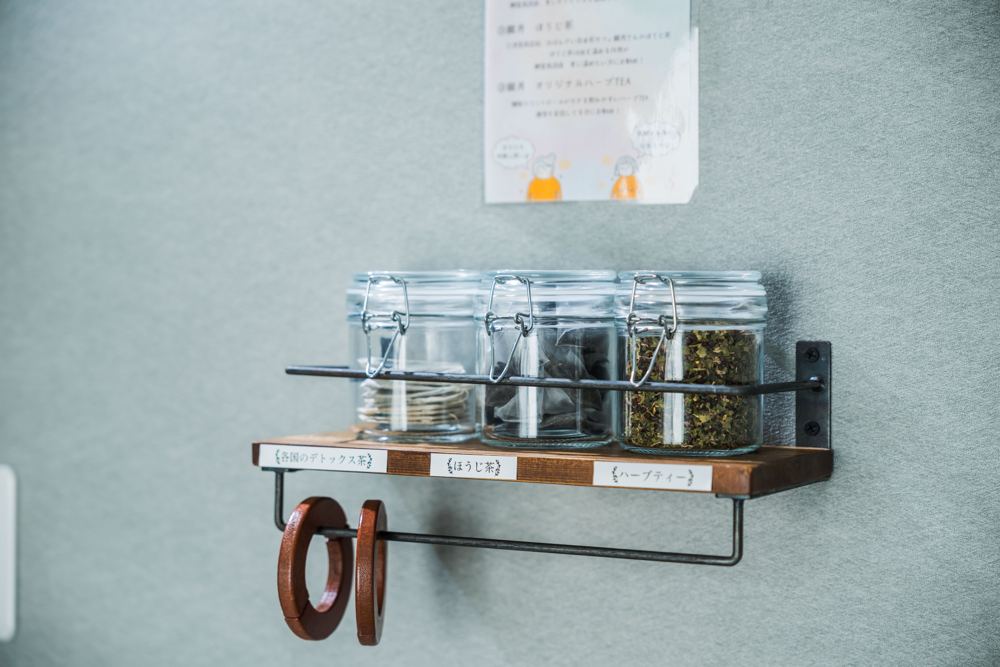
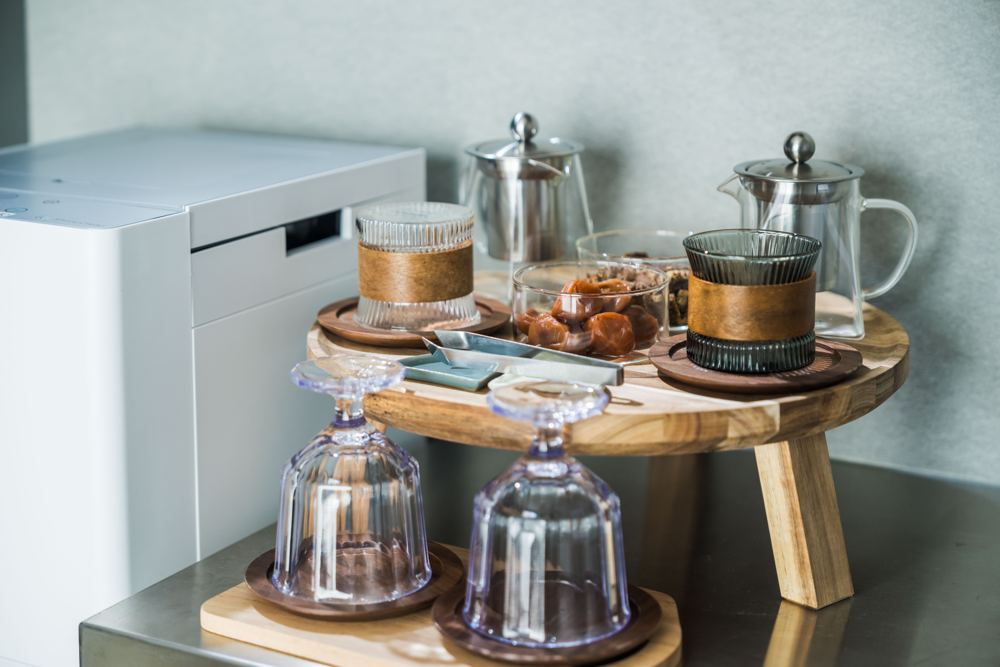
What visitors from abroad often notice is the attitude around the bath: unhurried, quiet and a little ceremonial. You take your time. You come out warm and calm, and maybe sit for a while with a cold drink or a cup of tea. It is this unhurried rhythm, more than any single facility, that many people want to bring home with them.
Fermentation in everyday life
Fermentation is everywhere in Japanese food. Miso, soy sauce, sake, rice vinegar and many kinds of pickles all depend on microbes working slowly over time. For many Japanese families, looking after fermentation has long been an ordinary part of the kitchen.
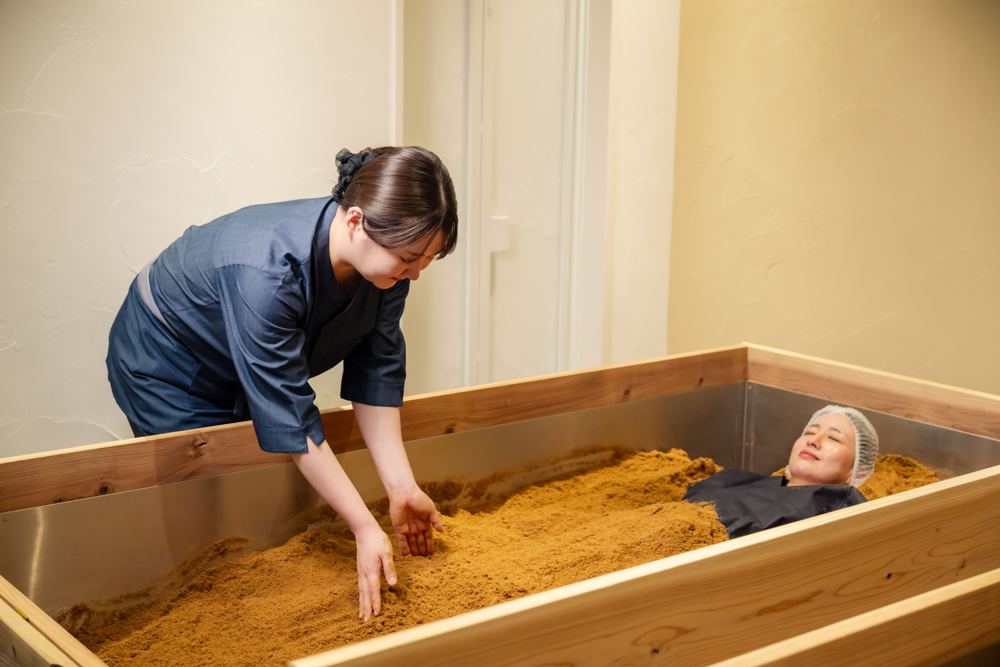
That familiarity with living microbes is part of what makes the enzyme bath feel natural in Japan. The bath is a bed of fine cypress sawdust and rice bran — rice bran is also a classic ingredient in Japanese home pickling — that grows warm as it ferments. No heater and no hot water are used. Just as a good pickle bed needs daily attention, so does a fermentation bath.
Nature, seasons and slow time
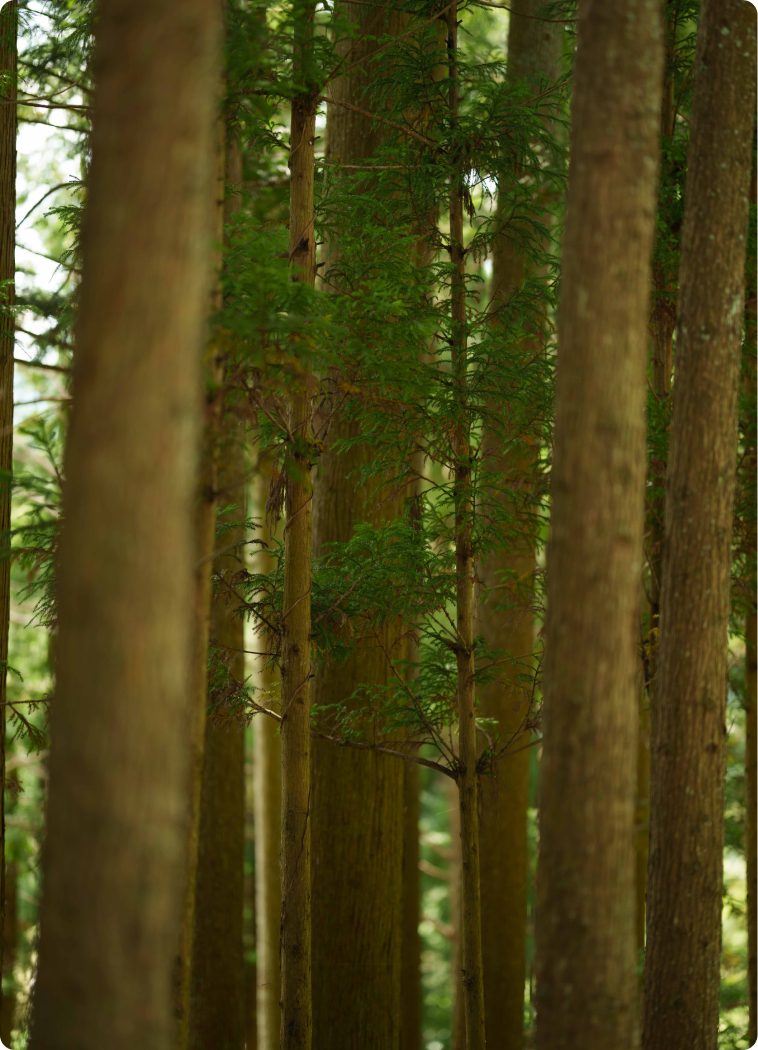
Other Japanese traditions share the same spirit: spending quiet time among trees, drinking tea slowly, eating with the seasons. None of them are about doing more. They are about slowing down and paying attention to your senses — the scent of wood, the warmth of a cup in your hands, the change in the air from one season to the next.
This is a big part of why these traditions travel so well. In many countries, people are looking for self-care that feels simple and real rather than high-tech or rushed. Japanese traditions offer exactly that kind of calm.
Where the enzyme bath fits in
The enzyme bath brings several of these threads together in one experience. It is a bath, but a dry one. Its warmth comes from fermentation. Its materials come from forests and fields. And it is slow by design.
A guest lies down in the warm bed, and a staff member gently covers them up to the shoulders. They rest in the warmth for about 15 to 20 minutes, surrounded by the scent of wood and rice bran. A whole visit, including changing, showering and relaxing afterward with tea, takes about 60 to 90 minutes. Many guests find the deep, enveloping warmth unlike anything they have felt in a sauna or a hot bath. Experiences vary from person to person.
It also fits modern values. The bath uses no gas and no tub of hot water, and when the material is eventually replaced, it can be reused as compost. At our own shops in Japan, around 90% of guests come back — a sign of how much people value the experience itself.
Bringing a tradition abroad with care
Outside Japan, an authentic enzyme bath is still rare, which makes it a genuine discovery for guests and a distinctive offering for spas, saunas, bathhouses and wellness entrepreneurs. But a tradition only travels well when it is carried with care.
The enzyme bath is not something you can start just by buying tubs and materials. The heat comes from living microbes, and fermentation shifts with the temperature and humidity of the room, the materials, the season and the number of guests. Reading those changes is a skill built through years of daily practice — not something easily learned from a book, a video or trial and error on your own. In a new country, the climate, the buildings and the available materials all change again.
Odor matters too. In Japan, as enzyme baths have spread, some shops have run into trouble with neighbors over the smell of fermentation, and not a few have had to close. Anything that ferments has some scent, so it is never zero; keeping it low takes experienced care of the fermentation, the space and the flow of air.
Here is how the path looks with and without support:
- On your own: you search for and test materials yourself, setting up fermentation becomes trial and error while rent and wages keep running, and when the warmth drops or the scent changes, there is no one who knows your bath to ask.
- With experienced support: you train for 7 days in a working shop in Miyama, Kyoto, and receive a certificate. With our optional Opening Support, we help you choose materials, build the fermentation environment in your own space and train on-site; with Annual Fermentation Care, you can get advice through the seasons. Odor is considered from the start — including our original fermentation liquid, the space and the flow of air.
Learning from people who live the tradition
Hakkou Ningen has supported more than 80 enzyme bath openings across Japan, from snowy Hokkaido to subtropical Okinawa, so we have seen fermentation behave in very different climates. Our baths are known for their low odor: we have installed them in hotels, salons and even apartment rooms, and none of the shops we have supported has had to close because of odor. We can help arrange shipping of Japanese materials where quarantine rules allow — this depends on the country — or work with materials from your own country. We are now preparing our first overseas shop in Los Angeles. It is not a franchise: you learn, receive a certificate and open under your own name.
Get the free program guide
Thinking about offering an enzyme bath in your country? Our free program guide includes pricing for each plan, a cost breakdown, a business simulation and the full training curriculum.
Message us on WhatsApp to get the guide — we will reply within three days. You can also learn more on our opening program page.
In your country too, experience
Japan’s enzyme bath.
Get the free program guide: pricing for each plan, a cost breakdown, a business simulation and the full training curriculum. Sent to you on WhatsApp within three days.


program guide


